Each month I get the RACV magazine, Royalauto; and almost without fail, I am appalled by their dated, conservative, tunnel-vision approach to problems on our roads.
This month, the cover boasts a “Special Roads Report. Congestion: the solutions“, so I thought I’d see what the 1950’s think tank had come up with this time. Living in an inner suburb that is already suffering under the effects of Citylink and now in the firing line of the new ‘East-West’ proposals – I have a vested interest in a creative solution that works for all.
The article heads off in a predictable manner, mostly just stating the totally bleeding obvious, it’s getting worse (oh, duh!). Then it goes to a series of bullet point ‘solutions‘. For the sake of brevity, I won’t demolish these one by one, but sufffice to say that all, (yes, 100%) of the short term solutions offered are focussed on making driving easier. Getting more people on the road, to their destination etc. In other words, a Growth Model.
Now, any fool with a pocket calculator can see that growth models are unsustainable. If you don’t know what that means (say you’re from the RACV), it means that it might be a solution now, but it’s just delaying the crunch. As if to highlight their stupidity, the article points out that in the 90’s things were better. What’s happened in the interim? – Growth! So, they’ve provided an example of why their own arguments are wrong.
What’s missing from their solutions? Well, things with two wheels for a start, but so much more… I’ve got a few of my own to throw into the mix 🙂
- Aim for zero growth – no new roads. Road spending to be limited to maintenance and safety works. Safety works to be focussed on speed reduction, not fitting more cars onto the road.
- Ban single occupant vehicles from the CBD, except for designated routes to drop-off/pickup points
- Halve the cost of public transport during low use periods – eg: before 6:30am, 10am – 3pm, after 7pm
- Dramatically improve the lot of cyclists and small capacity (<500cc) motorcyclists through provision of on road facilities, adjustments to road use legislation, parking facilities, reduced fees and charges.
OK, so it’s just a few off-the-cuff ideas, but I’m serious about the ‘no growth’. I remember when I got my licence so many years ago, I was told that driving was a privilege, not a right. If our city is to avoid drowning in bitumen, oil and exhaust fumes, we have to realise that it’s a privilege we can no longer afford to indulge on a daily basis. Discretionary car travel is a thing of the past, if there is an alternative, we will soon be forced to use it – whether by economic or legislative forces. It’s as simple as that.
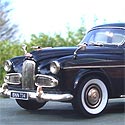 I remember in the early 70’s when the world was experiencing it’s first “Oil Shock”. Cruising along, dad at the wheel of the old Humber Super Snipe (kewl eh?) when the interviewee on the radio made the dire prediction that petrol would get to $1 a gallon. (Yes, it was definitly gallons, the ‘metrication’ program ran from 1960 to 1988).
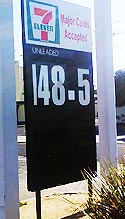 Well, last week the predictions were for $1.50/litre and sure enough, today I was filling up at $1.48.5. It won’t be long! Fortunately for me, the tank on my little CB250 could only hold 12.5 l. so I’m still only using 4 l./100km. I can see the current scooter craze is only going to strengthen in the coming years.